| Success stories
VÍT MUSÍLEK: After returning from Silicon Valley to the Czech Republic, I ended up in the basement and started building the company from scratch

Vítka, right at the beginning, describe to us what idea the SkyChatteres application is based on?
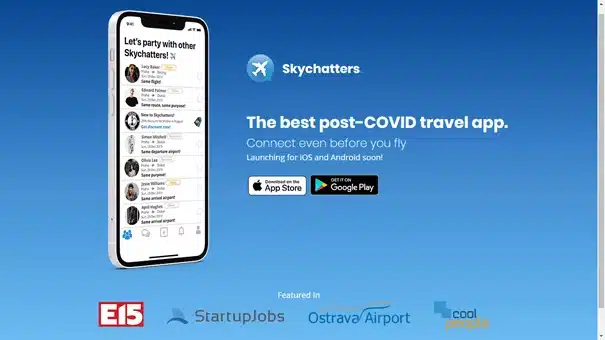
The app will show you the other passengers on the plane, even before you board it. You can connect with other travelers and ask about the Covid test requirements when traveling to your destination, check in together, sit next to each other, have a beer at the airport or maybe share a taxi from the airport to the city and save some money. If you are a businessman and you are flying to an innovation conference, for example, you can spend time in the air with other businessmen who are flying to the same conference and close a deal.
How did you get to the bottom of creating a travel social network?
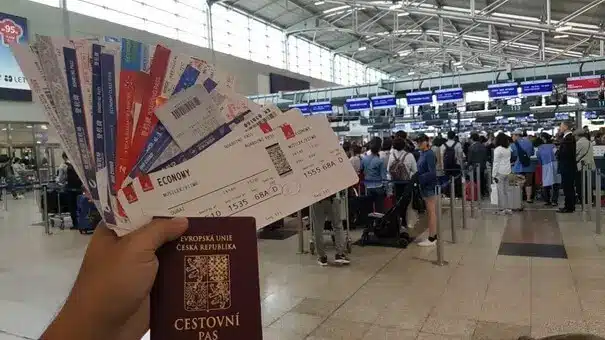
I needed it myself. I spent 3 years in China and flew on a direct route from Prague to Beijing and back again from Beijing. I had up to 16 flights per month (for work), in short, crazy. Well, suddenly I started meeting friends I knew from Beijing on the flight to Prague, and friends I knew from the Czech Republic on the way to Beijing. So I was looking for some app where I can enter my flight and see other passengers on the plane and chat. I couldn't find any such app, so I decided to create one. I didn't know what was waiting for me!
With the fact that you travel a lot, there is also a story when we met together on the train from Ústí to Prague, with the idea that you pack your bags in Prague and fly straight to Silicon Valley that very day. What was the trigger to go across the ocean?
The main trigger was the size of the US market and securing capital. Then getting some know-how about startups. Most successful startups are based in Silicon Valley, so it was an obvious target. I told myself that if I'm going to do something, I'm going to do it in a big way. I didn't want to play in the Czech sandbox. That's why the app is only in English.
How were your first days in this global startup hub?
Terrible! (laughs) We had an AirBnB booked for the first 3 days and then we had to move out. I didn't know it there at all, and I didn't know if we were going to be in San Francisco or somewhere down south around Palo Alto. I have a beautiful memory from the fact that when we slammed the door to the apartment and I sat behind the wheel of the car we bought there, they didn't have it insured or registered, so there was an intersection in front of me and I didn't know if I should go straight, right or left, because we they had nowhere to sleep that day and we didn't know anyone. All we had was an app on the App Store. So I decided we would drive along the coast towards Steve Jobs' garage.
When you look around, how do startup founders live in Silicon Valley? And could you share with us what this journey gave you?
It depends a lot on the stage your startup is in. San Francisco is the most expensive city in the world, which is why only those with a background can afford to fly there. We were a super Early-Stage startup at the time, and since we were always driving between San Francisco and Cupertino, we decided to build a bed in the car and live in it. Firstly, we saved a lot of money, but mainly a lot of time. When we flew there, no one knew us at all. When we flew out, we went to startup events and people already knew who we were and what we were doing. We met a large number of founders, talked with investors and picked up countless tips and tricks on how to build a startup. In addition to talking to a hundred angel investors, we got to meet the founders of the airlines and even saw Will Smith.
So you have fulfilled your mission in the USA. You are currently in contact with a potential investor, Airbus Ventures, who have helped you so far by passing on their know-how, and are now negotiating an investment of USD 3 million. We can imagine the financial investment, but how does the actual transfer of know-how take place?
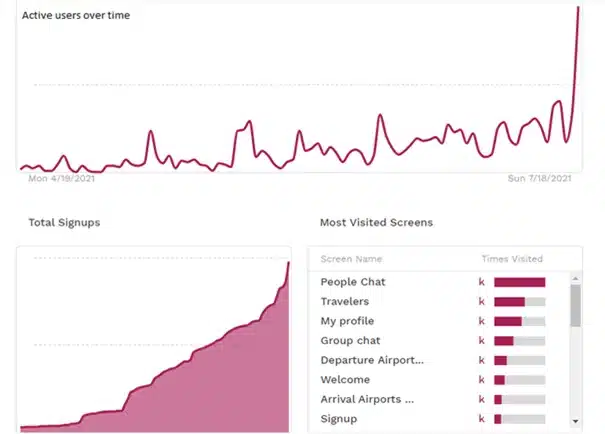
Yes, we have already had a call with an Airbus representative and are regularly following up on our progress. But Airbus is a big player and does not invest in small companies. So we first need to find Product-Market-Fit on several international routes in Europe to show them that it makes sense to invest in us. Therefore we will now (hopefully) close the bridge round by $500k to reach the Airbus. To give you an idea - here is a graph of our growth, which is still not enough for Airbus. The transfer of know-how was mainly in the overall direction of the company. They are people who are familiar with both startups and aviation, which is why we talked about, for example, how we could become part of the entertainment systems in airplanes, how to improve the service for users and how to stay competitive. If we don't know how to deal with something, we just call Airbus.
I will return to your departure to the US. How did you manage to manage a company based in the Czech Republic while living abroad.
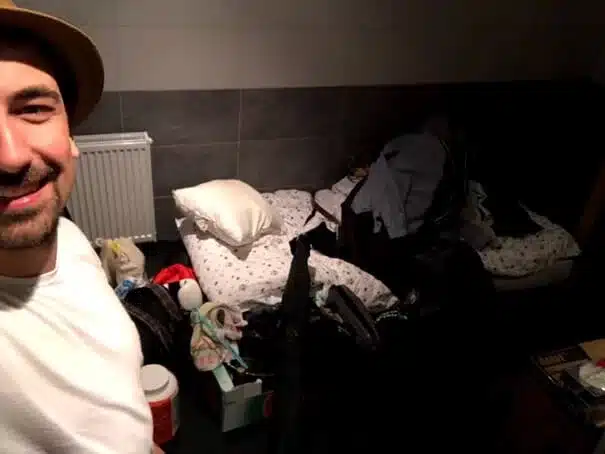
That just didn't work at all! It all came to a head the day I left. The programmers stopped programming and the whole team was just waiting for me to come back with a suitcase full of money, but of course it doesn't work that way. Instead of putting all our efforts together to create a legitimate business that would be attractive to investors, I was expected to pull the golden rabbit out of the hat. When I returned back to the Czech Republic, we all had such a fight that the whole team broke up and nobody was left with anything. Of course, as a company owner, I ended up the worst - I lost hundreds of thousands invested, years of hard work, the entire application, all users, and I had to call the partner companies in California that we had to end the cooperation. When this happened, I didn't even have a place to sleep and I ended up in a basement in a barrack with people I didn't even know and all I had left were two suitcases of personal belongings. I got out of it for a while, but as Martin Hausenblas says - it rebounds well from the bottom, and co-founder Jára and I rebounded high. When I think about it now and see that photo of the basement, I don't even know why I'm laughing. Those were rough times!
In one of the interviews, you mentioned that you want to move the company to Silicon Valley as well. Why? After all, the digital world has no borders.
He doesn't have that, but when he jumps, he jumps from a great height. The US Embassy in Prague helped us get help from a local angel investor who sees an opportunity in our product and happens to be a friend of hers who is the founder of an airline. I also think that Americans are more open to contact with people than Europeans. At the same time, if the company continues to grow, I think the media will pick up on it much better. Oh, and I also love surfing, and in Prague you can only surf on the Internet.
For the last 2 years, travel has been in a big slump due to the pandemic. How did you manage this period? And how does the sentence on your website "The best post-COVID travel app" relate to this?
Even if it doesn't seem like it, Covid has helped us a lot. Before the pandemic, my company collapsed when I arrived in the Czech Republic, so at least it gave me time to breathe a little and get myself together. It also gave us time to program the application from scratch, because we had nothing left from the previous team. The best post-COVID travel app was created, if I remember correctly, purely as a marketing move. Everyone knows that post-Covid travel will look different, and since we launched the app after covid and it actually helps people to inform each other about the situation regarding, for example, the necessary covid tests, we named it that. And also because no other app will show you the passengers before you even get on the plane.
The application is currently available on 122 international flights in Europe. But if we move into the future and you cover most of the flights around the world and you are happy with the number of users using the app, how do you start monetizing this within SkyChatters?
It's growing fast, we're already available on 179 international flights in Europe and we're currently working on a collaboration that will get us to 165 travel agencies and agencies in the Czech Republic, which would give us a huge boost. Even if it doesn't seem like it, we are a B2B company, so for example we offer travel agencies to reach users flying to a destination in which the travel ticket has infrastructure, but those users did not buy a trip from them. In this way, they can improve their PR with us or use us as a marketing channel for which they are willing to pay.
And what are your plans in the near future?
I'm in Portugal right now, so I'm going to surf tomorrow (laughs). Otherwise, without a doubt, growing Skychatters as quickly as possible and taking advantage of this post-covid situation, because it helps our product tremendously - people need to connect more than ever. We will also set up a "Covid Assistance" or 24/7 phone line in the application, where you can call and ask about rights and obligations when traveling abroad - we will have the latest information.
Is there anything you would like to add at the end?
Certainly! A lot of credit for the way we are doing now goes to my co-founder Jár Krajč, who survived the collapse of the company and decided to continue despite the fact that we were broke and I ended up in a basement with strangers. Without him, it would be much harder to pull up. And one more thing: we are looking for promising people to join our team. Mainly programmers, business developers, in short colleagues, with whom we will create a new world of travel up there in the air. Just call us at info@skychatters.com.
We wish you, your co-founder, who never left you, and the whole team a lot of strength for the future!