| Success stories
Technology is a tool, people are the reason, says successful Ústí nad Labem startuper Matyáš Michel

Instead of complaining, I need to change things.
Matyáš Michel makes no secret of the fact that he has always had a tendency to create something. He started his business career while still in high school – first as a freelance designer for influencers and YouTubers, later working in marketing for Czech e-shop brands. But he quickly discovered that just making money wasn't enough for him. "I get annoyed in the long run when something doesn't work and nobody does anything about it. Instead of complaining, I feel the need to try to change things - and that's probably the main driving force," he says. That's why he focused his first e-shop on refurbished and upcycled products. He already suspected that entrepreneurship would be a path to impact rather than quick profit for him.
Play, movement and the digital world
The turning point came during Covid. Together with his co-founder, he began to think about how to respond to the worsening problem of lack of exercise in children. In the public debate, technology was often blamed – children spend time in front of screens instead of moving. But Michel suspected that technology could be the key. “We adults use technology naturally – watches, Strava, Garmin. Why can’t this work for kids, who are even more digital?” explains.
This is how Gamifit was born – an application that combines movement with game elements. However, the path from idea to functional product was not straightforward. They started with simple prototypes: the application contained only one or two features and the team looked at what really motivated kids. Gradually, Gamifit moved from a “gamified fitness app” to a full-fledged game, where movement is part of the game mechanics. Today, the app offers stories, battles, and community elements – and becomes more of a game for kids than an exercise tool.
The first reactions of children and parents surprised even the creators themselves. "At one summer camp, we tested a very simple prototype – almost 'unplayed' – and even in an environment where children don't want to embarrass themselves, the vast majority actually started practicing. We didn't expect that and it encouraged us a lot," Michel recalls. Today, the public beta already has hundreds of children, over three thousand recorded activities, and an average of dozens of logins for more active users.
Psychology as an unfair advantage
Gamifit's success is not only due to technology, but also to the psychological background of the founders. Matyáš studies psychology at Charles University and considers his knowledge of the field to be a fundamental advantage. "Psychology is key for us – especially the topic of motivation and behavior change. That's our 'unfair advantage', we have this knowledge within the team," he says.
He also found practical support at the university. The Center for Knowledge and Technology Transfer helped organize research with more than two thousand children, for example. However, he adds that the wider university environment is not very supportive of such projects - outside of specialized offices, support is rather limited.
When he talks about the balance between play and movement, he refers to the theory of self-determination.For motivation to be intrinsic, it must be linked to a sense of competence, autonomy and belonging. We create an environment in which children can experience these feelings and 'find their own' motivation."Game elements like points or avatars are just a starter in Gamifit - in the long term they should give way to social and community factors.

Cognivibe: burnout prevention
Matyáš Michel's second project was born from a very personal experience. An intense period of work, when he would close his computer at eleven at night and still feel like he couldn't get anything done, brought him to the brink of burnout. "It was like training for a marathon, but sprinting 20 kilometers a day," he recalls. Thanks to his psychology education, he was able to slow down, but the experience became the inspiration for a new app – Cognivibe.
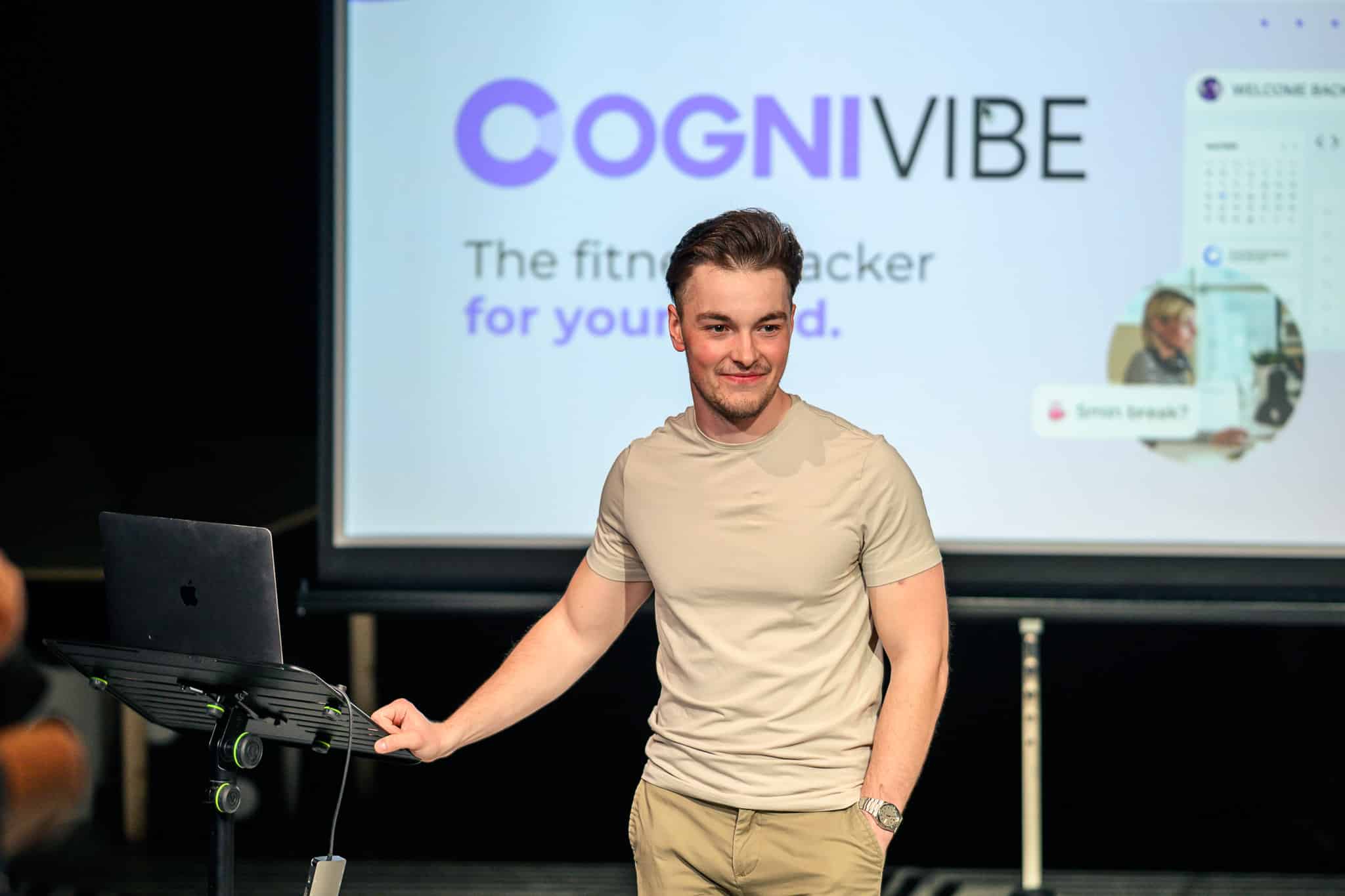
It monitors how a person works with a computer: typing speed, error rate, or window switching. Based on this, it evaluates cognitive load – i.e. the level of concentration and the risk of stress and burnout. "Thanks to this, we can offer specific recommendations based on real-world computer behavior," Michel explains.
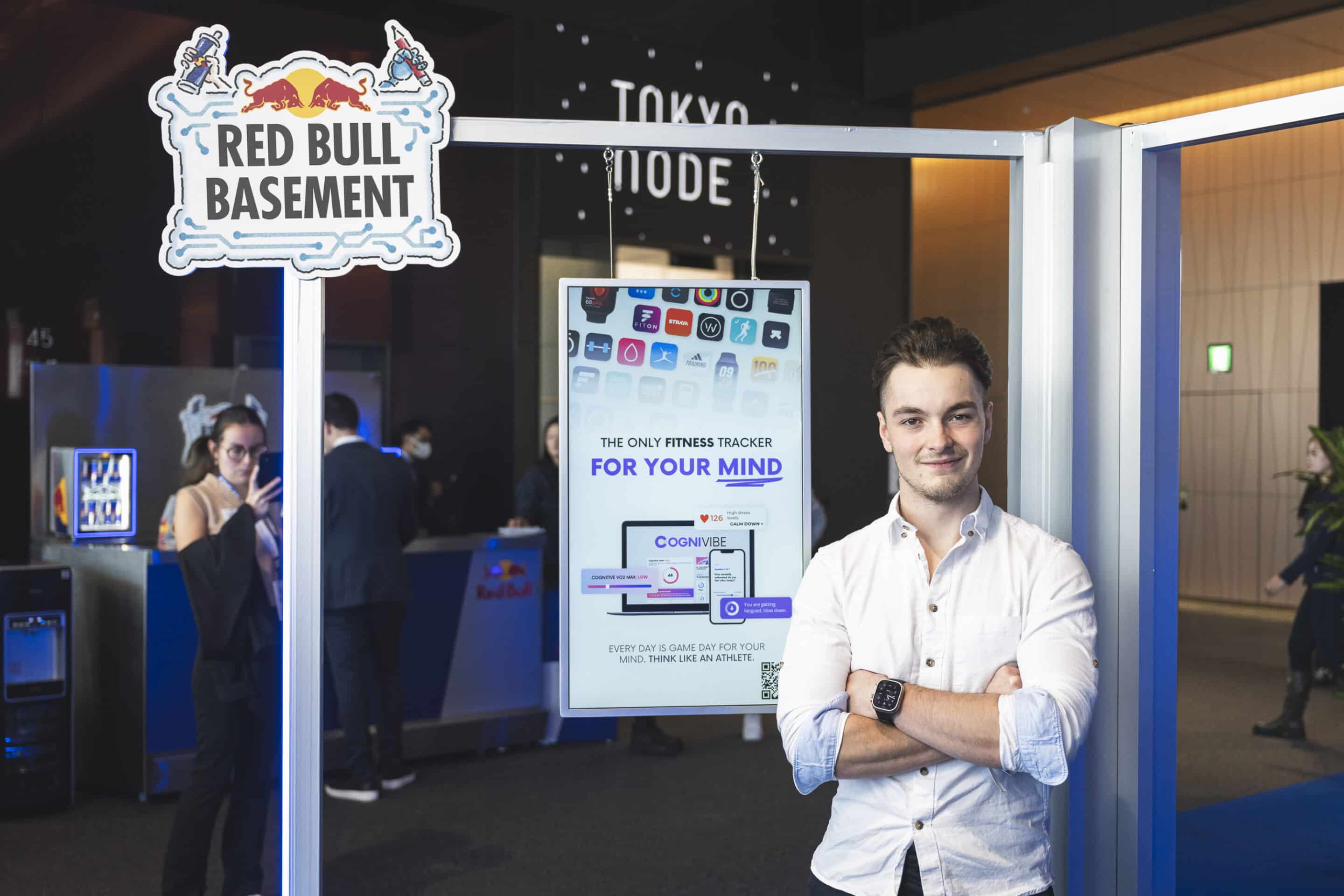
The project also brought valuable experience from abroad. With Cognivibe, the team reached Tokyo, where they collaborated with investors from Silicon Valley and Microsoft for Startups. "In the US, the culture is significantly more 'salesy': they can tell a great story about themselves and other people's projects. In Europe, we are often afraid to sell ourselves. On the other hand, sometimes the substance gets lost in that great 'pitch'. For me, the ideal is balance: being able to say it well, but also having real value behind it," he says.
Between psychology and startups
Psychology is about depth, startups are about speed. But Michel doesn't see a fundamental contradiction between the two. "For me, psychology is primarily a science, and startups share many principles with science: hypotheses, an overview of what we already know, and methodological verification. The difference is more in speed," explains.
He thinks the same about artificial intelligence: "The question is whether anyone will ever understand it in its entirety. In some ways, AI may understand psychology better than we do, but that doesn't mean it will understand it completely."
Innovation between man and technology
When you ask him what drives him, he answers simply: an internal reason. "It's easier to get involved in a project that's supposed to help children move or prevent people from burning out than in an e-shop with pots. That inner reason is what matters," he says.
That is why he sees innovation primarily as a spiral of interaction between humans and technology. "We have a problem, we create technology, it solves it - and brings a new, secondary problem. But each iteration moves the quality of life higher. Innovation without humans makes no sense - it is there because of them. Technology is a tool, humans are the reason."
You can look forward to Matyáš Michel October 16th at our startup festival Festupwhere he will present your business story.