| Success stories
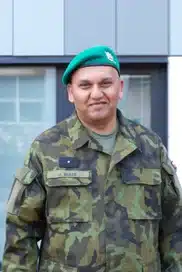
Martin Mata: It's all about the head, there was no way I would give up
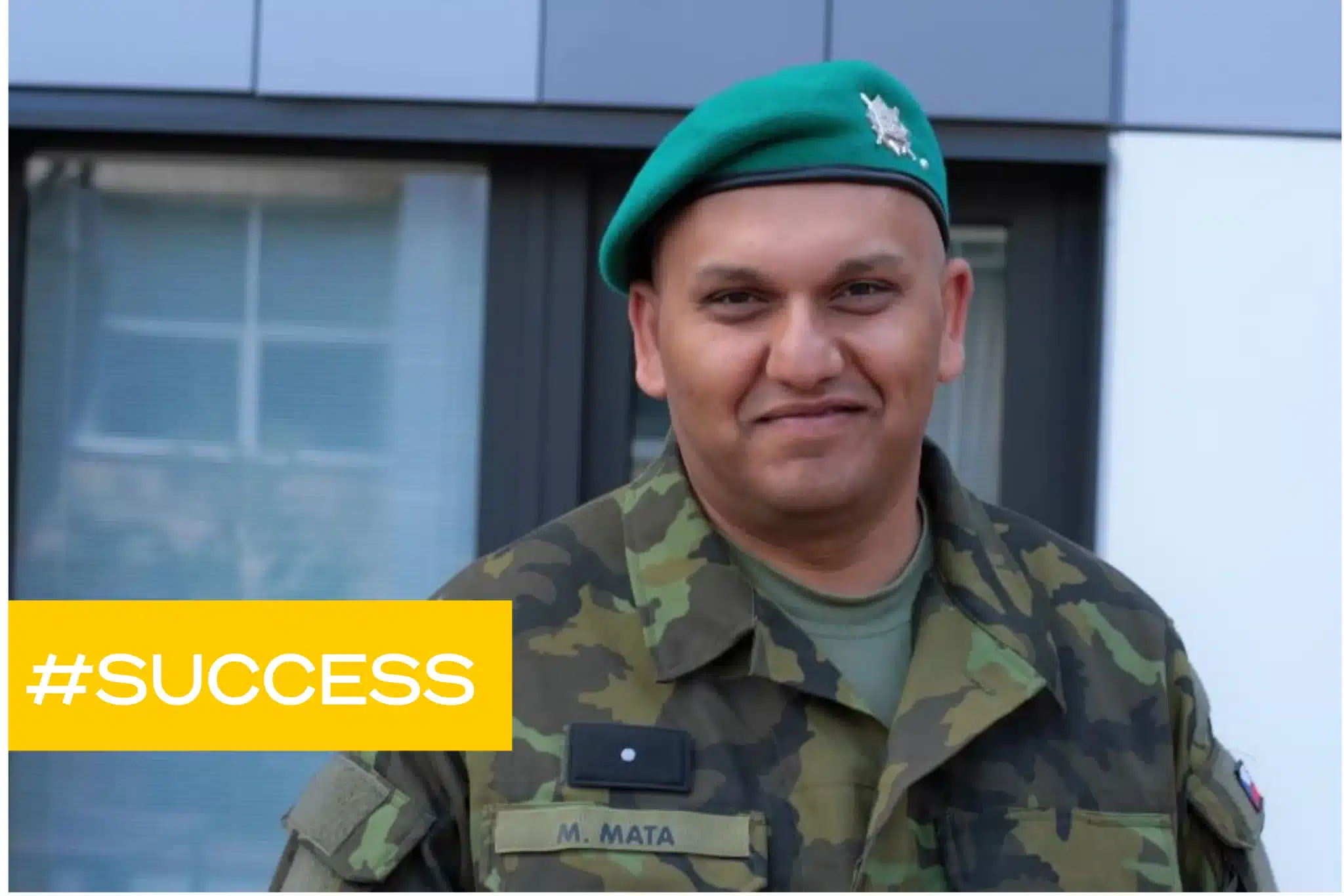
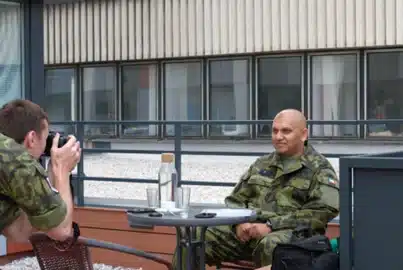
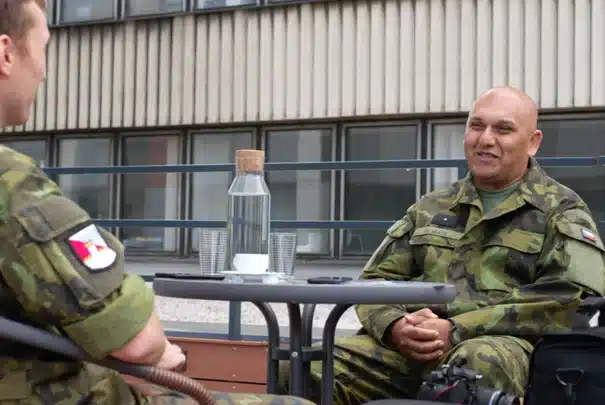
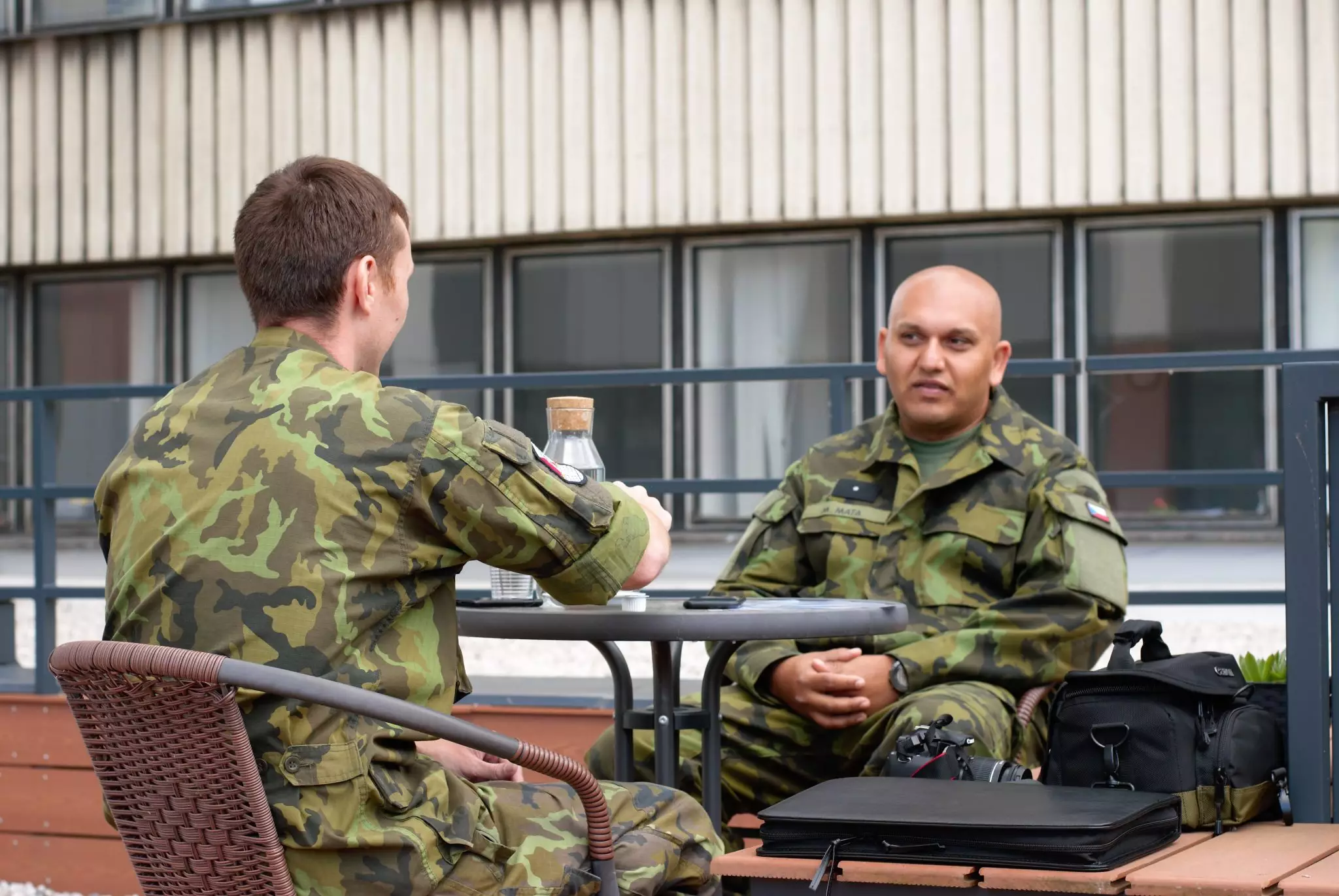
The interview with Martin Mata was not a classic interview. We actually only photographed the visit of Captain Roman Kutílek from the Ústí nad Labem Regional Military Command, who came with Martin to do an interview for the army media. It's actually an overheard conversation, in which we don't ask anything, we just pricked up our ears and listened to someone else's conversation.
Do I need this?
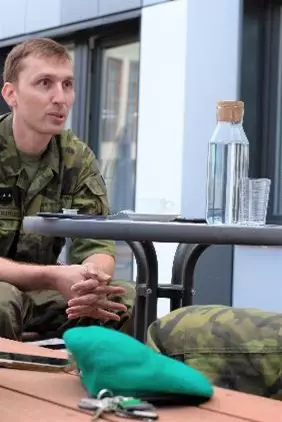
Martin is sitting on the terrace of the ICUK in military uniform, with one stone in his epaulettes, i.e. with the rank of private, and he is talking relaxedly and with a distance to the higher batch - Captain Roman Kutílk - about his experience:
"When you're forty and you've reached a certain position in your life, it's hard to believe that you're suddenly a private Mata, a scout to be yelled at. I asked myself, do I need this?' But the test of the ego is not the only thing, in addition to being separated from family and loved ones, the training is not easy even from a physical point of view.
I felt better so I finished it…
In the questions, Captain Roman Kutílek gets to the story in which Martin dug to the bottom. During the demanding training and due to diabetes, he lost consciousness.
"It graduated to comprehensive training. On D-day we went to bed quite late, they woke us up at two because of the alarm and we set off ten kilometers with full weapons, then we dug in, defense, shooting, first aid tests, then running again. At night again the alarm around 1 am and immediate transfer. At 5 in the morning, when we then had a break and got a very light breakfast, I felt sick, I said: gentlemen, this is not good... and I lost consciousness for a while. They examined me, and suddenly the stick was found, I felt better..., so I finished it. The team didn't leave me alone and took care of me!"
"Of course I could have given up, no one would have been surprised. But it's all about the head, about a strong will. There was no way for me to give up. Even though it was very challenging many times. It wasn't one bottom from which one bounces off and heads up, there were several," adds Martin, which subsequently led his superiors to award him a medal.
War is not easy
The fact that out of 130 people who started active reserve training, 96 completed it. Many were injured, some postponed completion, or simply gave up.
"But it must be said that many women completed the basic course, and I am sorry for them, because they had absolutely no concessions, they had to go through the same thing as men", adds Martin.
The difficulty of the basic training of active reserves is definitely not an end in itself. "Soldiers in active reserve are an important part of our country's defense and full-fledged partners of professionals, during training and deployment. Territorial forces units (infantry companies at regional military headquarters) se they primarily deploy for the protection and defense of critical infrastructure objects and help during natural disasters," our knowledge is supplemented by Captain Roman Kutílek, senior senior command officer of the Regional Military Command in Ústí nad Labem.
"The basic course lasts six weeks, and during that time it is necessary to turn people who have not been kissed by war into units that can handle the demanding tasks of defense. As an active reservist, I now have two to three weeks of additional training twice a year," explains Martin Mata further.
Interest is ten times higher
Just to give you an idea - the army of the Czech Republic has approximately 26-28,000 professional soldiers, while the active reserves currently comprise approximately 3,700 people, of which over 390 are women. That's not much, is it. And what is the interest in the service in active reserves?
"Compared to last year, it has increased substantially, only in the Ústí Region in 2022 it is ten times as much as last year. The crucial moment here is, of course, the war in Ukraine, which helped people to realize the importance of the army and the defense of the homeland", says captain Roman Kutílek.
However, the journey from submitting an application to the active reserves to starting basic training is quite long; during it, up to two thirds of interested parties are lost - they do not provide the necessary medical reports, extract from the register or other documents, or they simply change their minds when they find out what the training entails.
"For me, the crucial moment was not the situation in Ukraine," Martin Mata continues again, "I decided to join the active reserves earlier, in August 2021, but it took me a long time to mature. At the same time, I never had anything to do with soldiers. I lost my mandatory military service, it was canceled before I finished college. But I missed the experience, despite the fact that it felt like the right decision."
It is a responsible and important thing
"In the active reserves, a really varied composition of people, both in terms of professions and ages, will come together - a driver, a lawyer, an executive director, a salesman... they all have to get along, cooperate, help each other, listen to their superiors and follow the rules, regardless of age or level of achievement career", Captain Kutílek describes the specifics of the military environment.
"I would like to see service in the military, whether in the active reserves or the professionals, regain its prestige. I understandably hope that my story will motivate others to take a similar step. The training itself is not free at all, it is mentally and physically demanding, but it enriches a person," says Martin Mata at the end of the interview, adding: "I managed it, others can too - in a similar position or similar physique. By the way, I lost 12 kilos and my blood sugar dropped from around 14 to 8. Of course, you can't approach this naively, idealistically, it's a responsible and important thing."
The interview ends, we take a few photos while watching, Captain Kutílek says goodbye. Finally, we are still thinking about how and whether it would be possible to connect the world of business and the armed forces. Compliance with rules, drills, cooperation in a team, but also humility and the need to suppress one's ego is a great school for managers. What do you think?
You can read the article, which originated from Martin Mata's interview with Captain Roman Kutílek here.